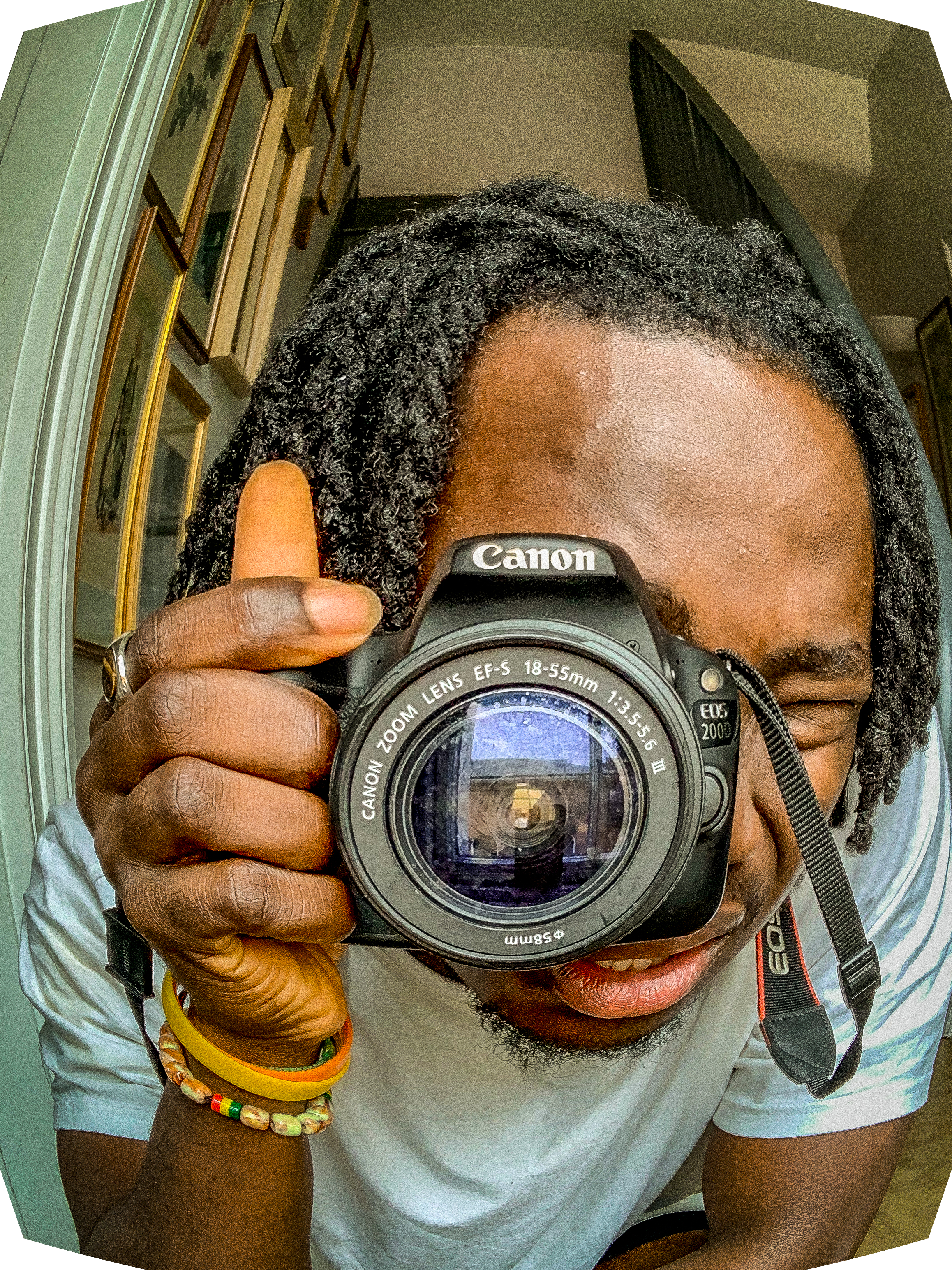
Hello, I’m Mo!
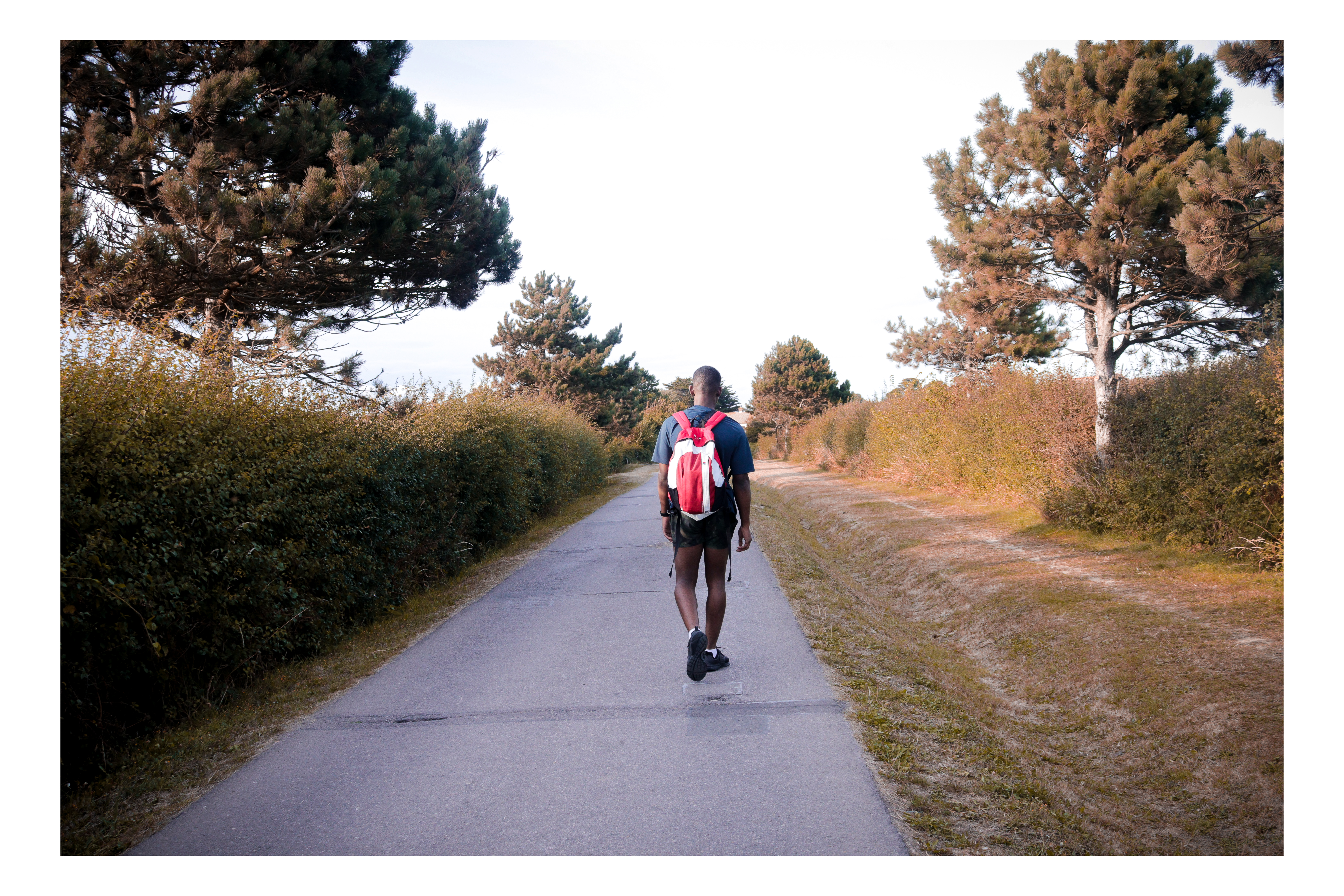
A Civil Engineer by profession, based in England. Work-life balance is ideally important. Hence, in my free time I explore the world by taking you for a walk with me in UK & Europe, along with my Ethnic journey as a Civil Engineer.
Socials
-
A Language of Togetherness

A mini wooden goal post A year ago, I went back home – Sierra Leone. A trip of a lifetime. I wanted to reconnect and reminisce with that of my upbringing and reflect on the journey of transformation so far.
What re-ignites these reconnections are the moments of laughter and fun, occasionally some bruises too. As for many boys/men growing up it was Football – street football in third world countries. Using natural environmental materials at disposal to be creative in order to have fun. Stones/timber as goal post, flip-flops as boots, our daily casual clothes as match-kits (sometimes vestless). Amongst the midst of cars & bikes constantly flowing past we often stop and resume once they’ve vanished.
A mix of Olders and youngers dripping in sweats under a 40 plus degrees heat, sweats sometimes washed away from our skin down into the Gutters of Freetown during rainy season. The best sensation was when it rains. We try to avoid kicking the ball into the open gutters flowing in high velocity of rainy waters as you’d end up chasing it forever. Bystanders stalling; wanting to be a part of the scene as they too could relate to the atmospheric adrenaline of adults & kids in flip flops kicking ball made out of used plastic. The energy is competitive and special.
I was strolling in the neighbourhood at some point during my visit and came across this scenery – once again. But this time I was the bystander who stalled, admired and took pictures. Itching to blend in once more, smiled at how lucky they are to be playing on a tarmac floor as I didn’t have such luxury growing up.
A way to pay tribute before my departure was to organise a football match calling on all the Olders & youngers within the neighbourhood I grew up in. People who played a significant part in my life – like literally. They turned up in abundance having conservations with each other on: ‘Last time I saw you was 2yrs ago’ or ‘I haven’t seen this guy for God knows how long‘. We played, had food refreshment, reminisce and went our separate ways. A hobby best described as a language of togetherness.
-
Florence – Italy
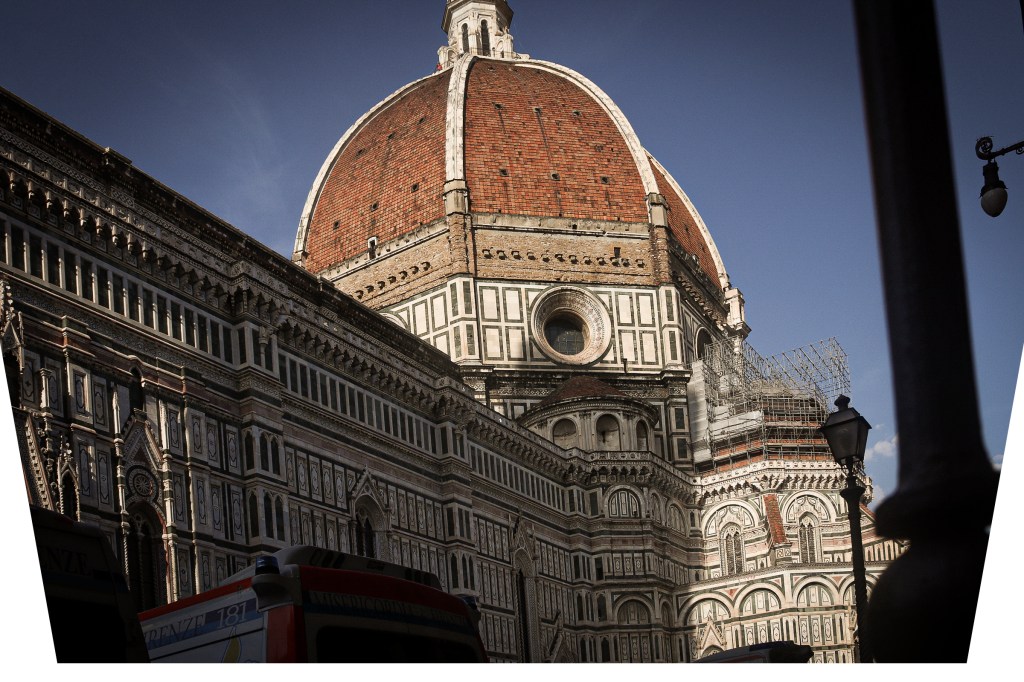
Duomo Two things that comes to mind when someone mentions the city of Florence : Leonardo Da vinci & The Medici family. Well for me anyway. That’s probably because I watched the TV series _ ‘Da Vinci’s Demons’ for like 3 times, obsessively.
A show that digs into the history of its people, rulers and at the time known as the city of centre Renaissance. Thus prior to visiting Firenze you’d say I somewhat fairly knew of its history.
If you are looking to party-hard I kindly suggest you look for somewhere else because this is a city rich in medieval architecture, art & poetry. Sadly, as a solo traveller I was only there for 2 days.
I stayed at a hostel called ‘Plus Florence’ (see on map below) which I’d highly recommend for solo & group travellers. Located pretty much bang on at the centre of Florence and its attractions. Reasonably cheap ( £65 for 2 nights), along with a splendid rooftop view, swimming pool and more.
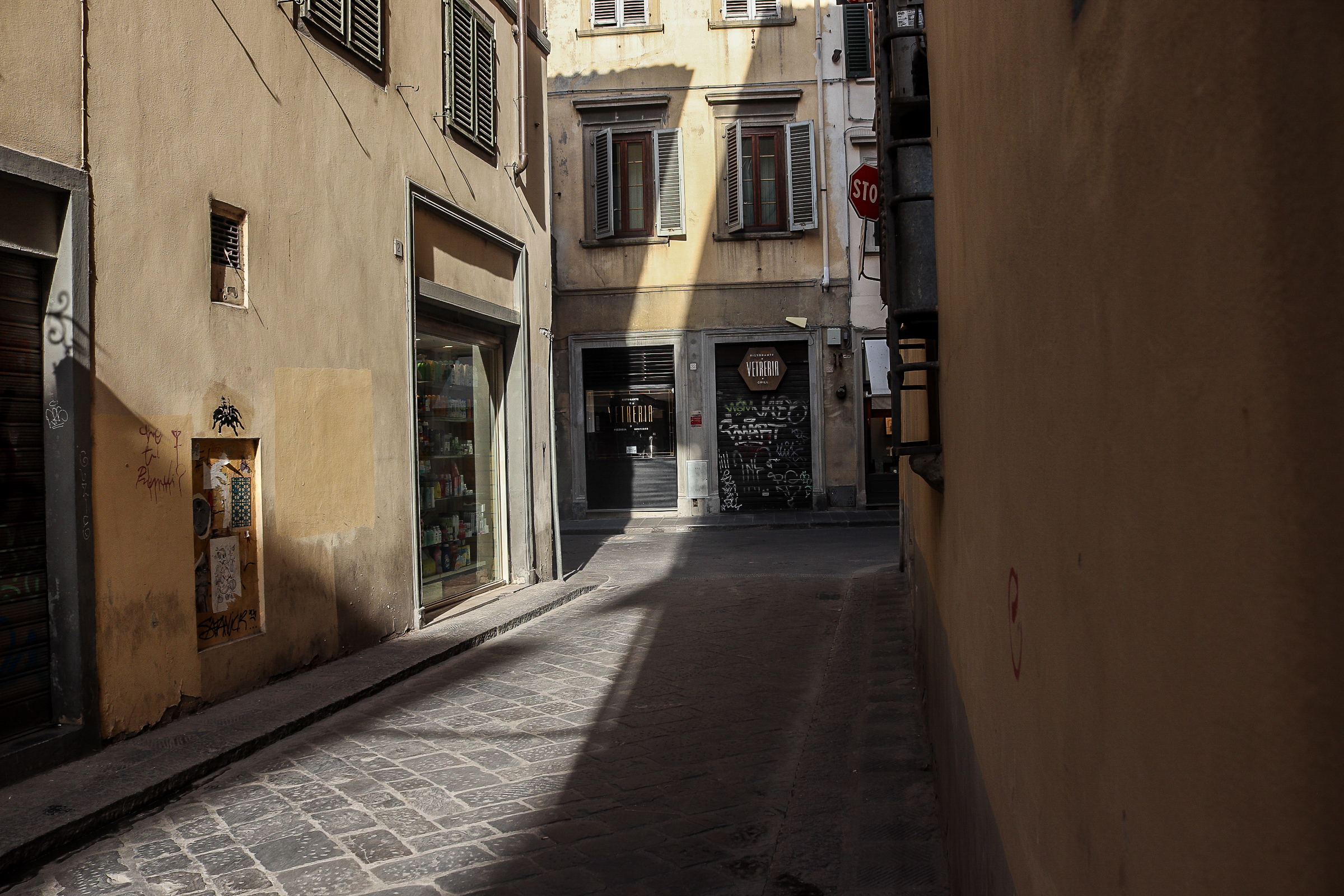
Worth the money! A confined city that you could walk to any designated attraction with ease.
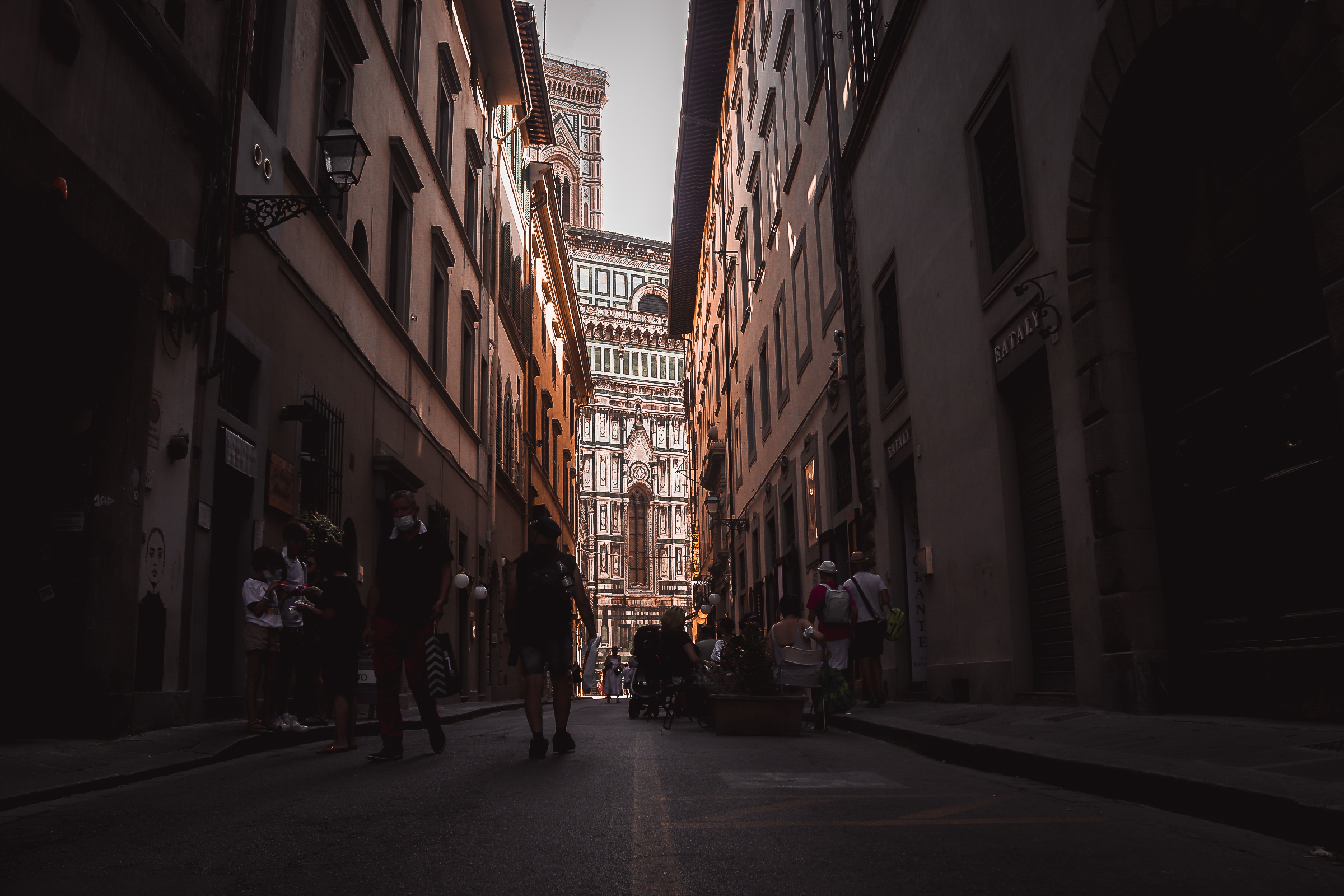
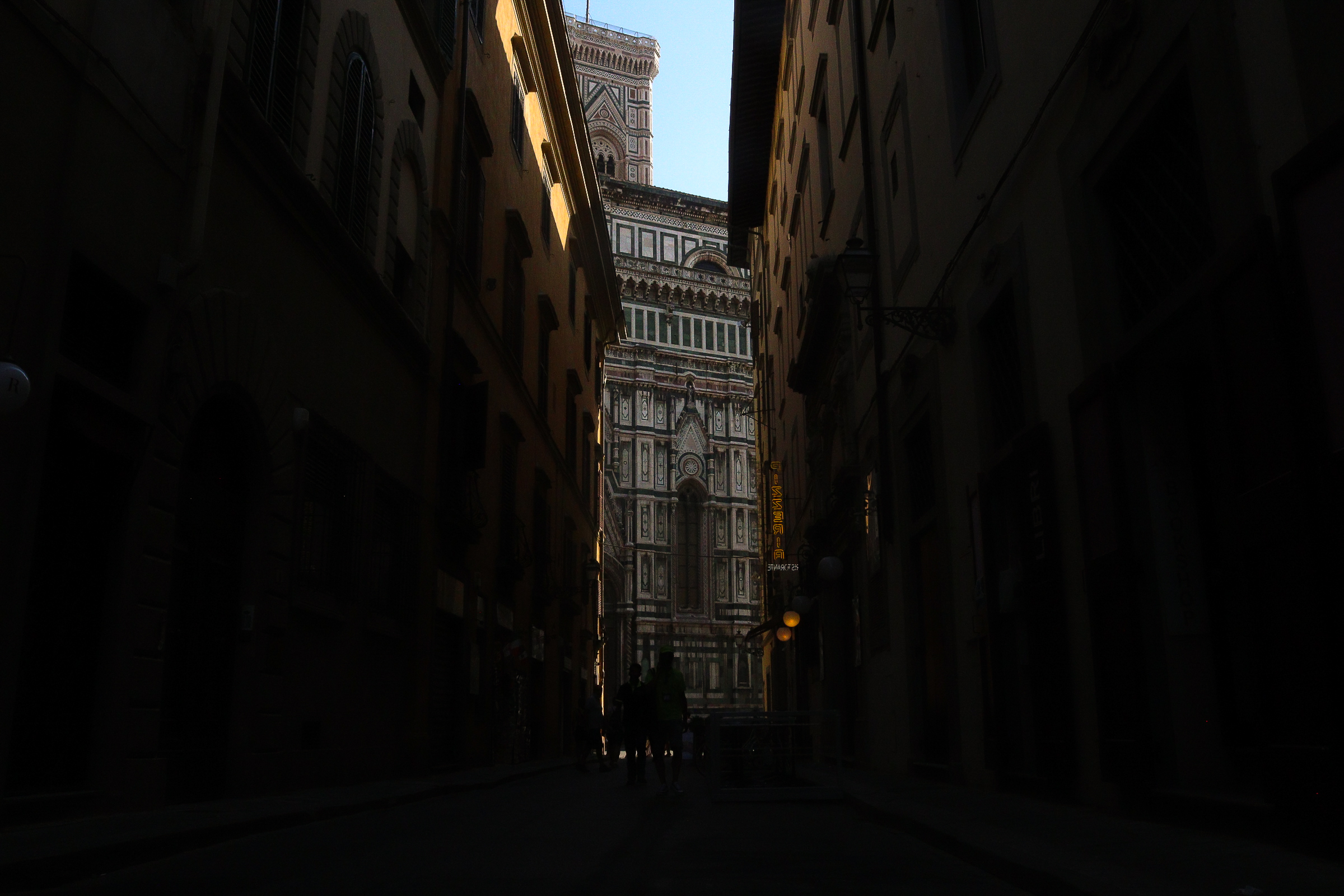
I think the main attraction drawn to most travellers is the Duomo – Santa Maria del Fiore. A Landmark Engineered with an unmissable red dome structure that can be seen from wherever you are in Firenze.
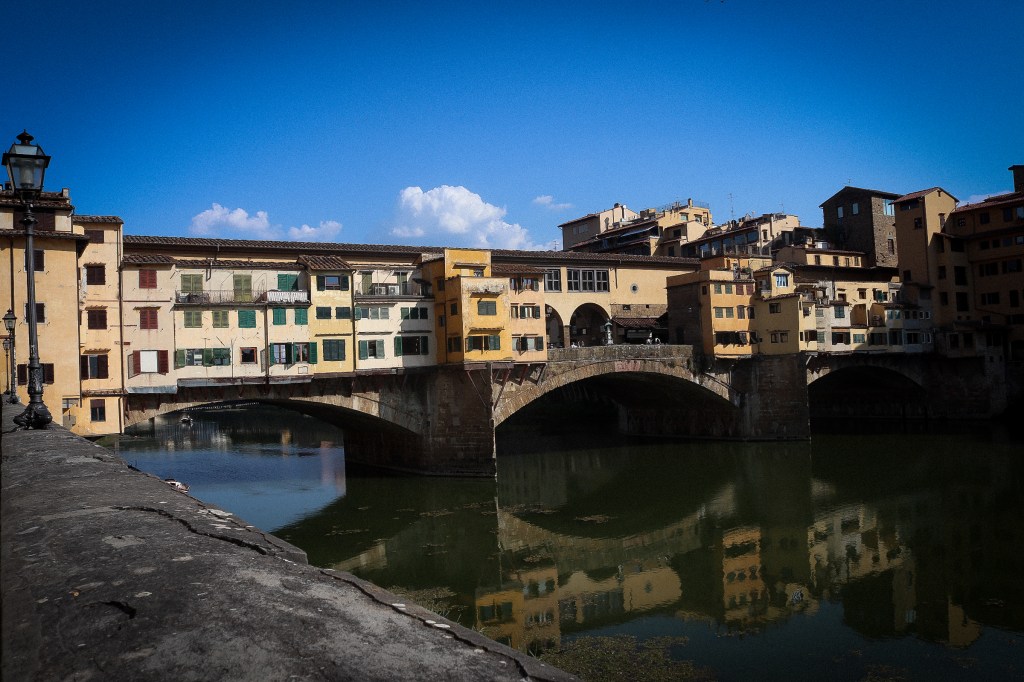
I also loved the ‘Ponte vecchio’ arched river bridge with shops literally sitting on top of it structure. There are definitely more attractions to visit such as the likes of Leonardo interactive museum, Pitti palace, Uffizi gallery, David of Michelangelo and more.
I briefly met some amazing people/travellers like myself from various continental destinations and you’d be amazed how much you have in common and how aligned your travelling plans are with theirs. It was indeed a great ‘walking’ experience!
‘Ponte vecchio‘ 2021



-
Concrete Cubes; Not Sugar Cubes
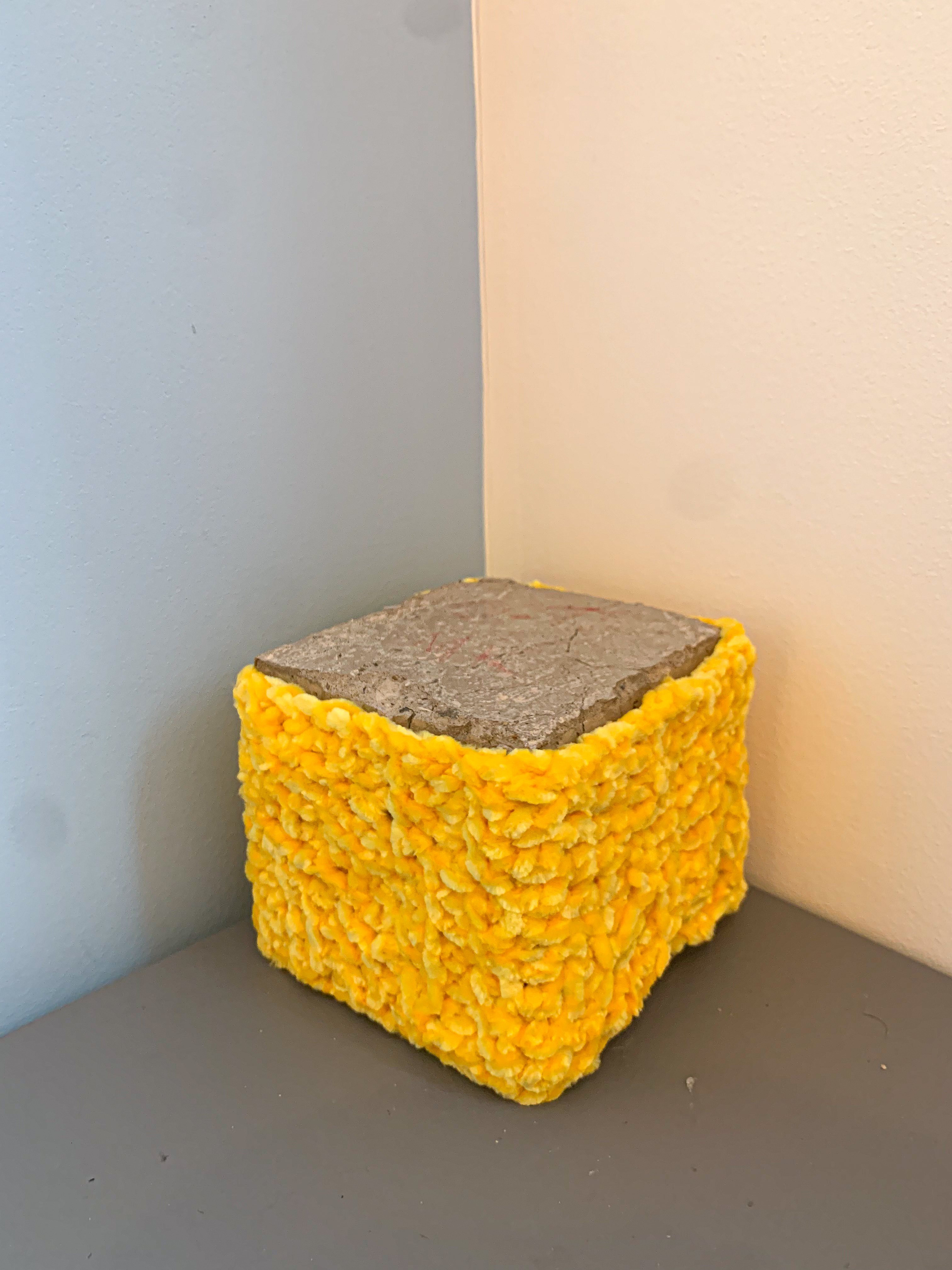

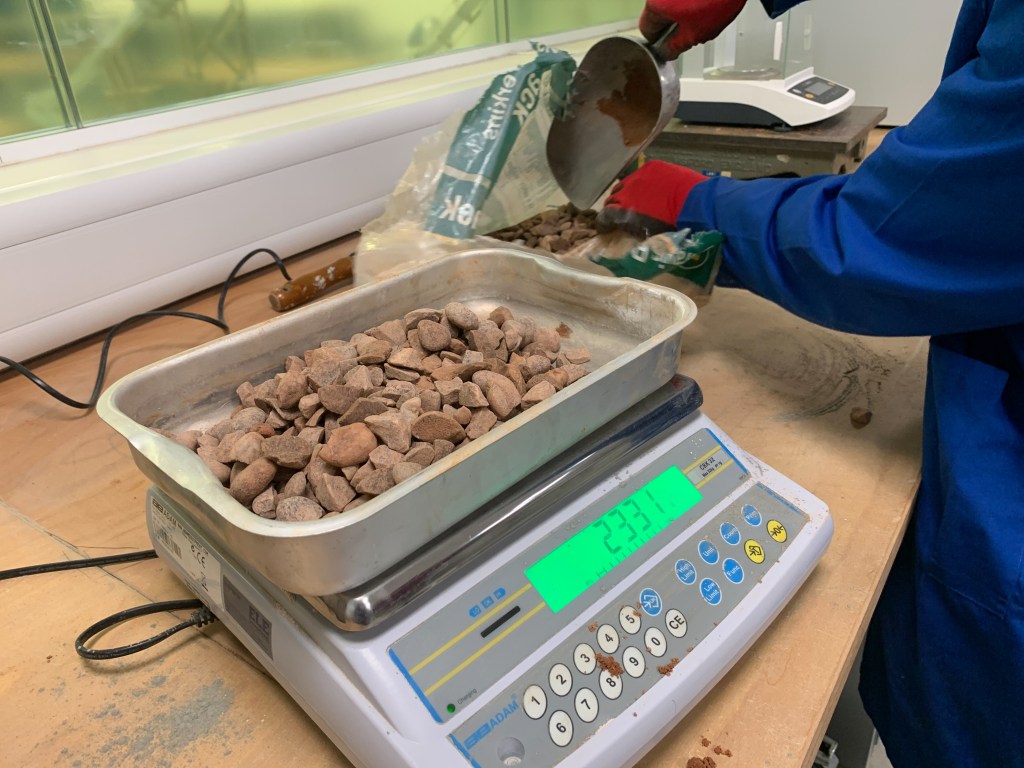
A personal souvenir : made in the year 2021. Do you remember the white sugar cubes our old fashion parents/relatives used to drop into the oceans of their tea or coffee? Now picture those in a much bigger size but made from sand, cement, stones, and water. As a result, those mixtures combined give us a material commonly known as concrete. You scoop the concrete into a mould and allow them to cure/dry for a day. The result is a concrete cube. I must admit, once they cure for a day, they become stronger to break. After all the word concrete means strong.
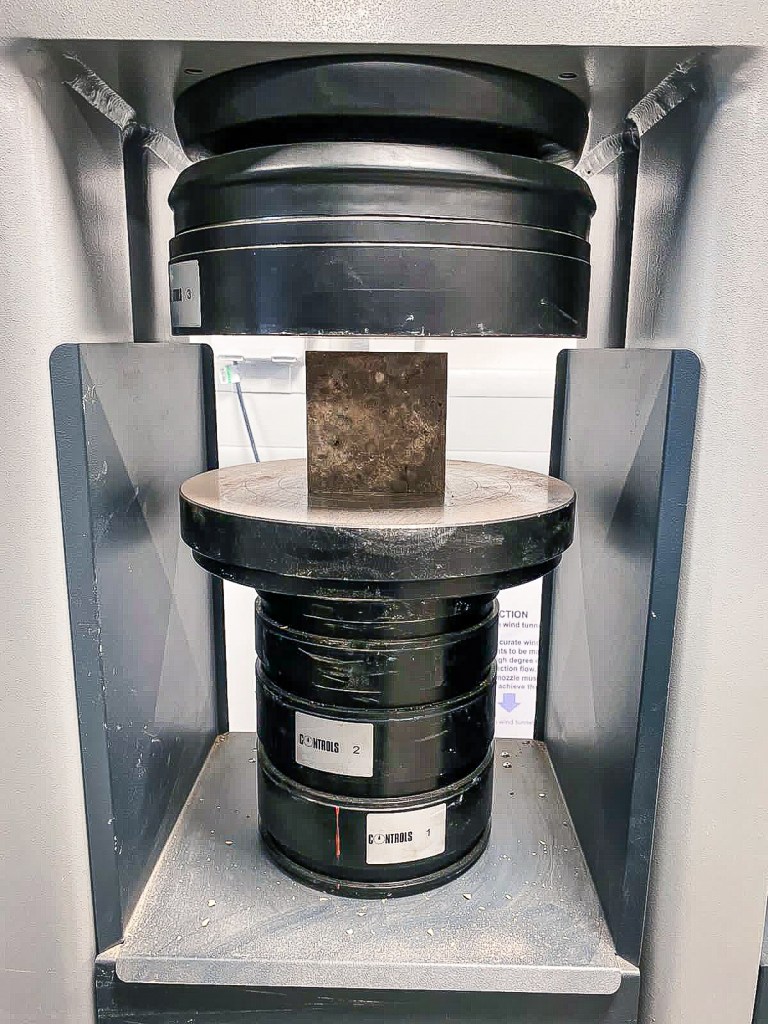
You might be wondering, why go through the troubles of doing cubes of concrete? To name a few: houses, buildings, roads, and bridges have a significant portion of concrete in them mainly because of the strengths it could offer. For example, if you are building a bridge, it is necessary to know if it would withstand the weight of the cars and not just collapse. Hence the material of choice is vital. Concrete has a funny way of reacting to weight by means of compression and tension. Therefore, the purpose of doing a concrete cube test is to validate the strengths of the concrete to ensure its in line with what the Designer/s (A Civil Engineer but specialised in design & software calculations) designs for that specific job.
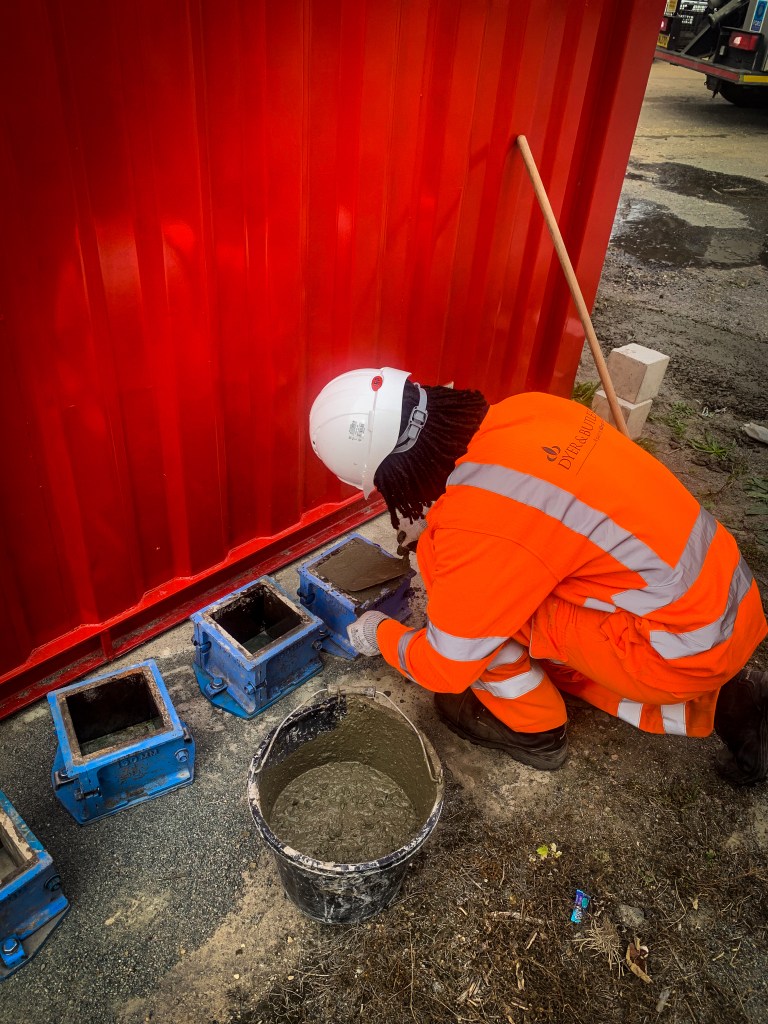
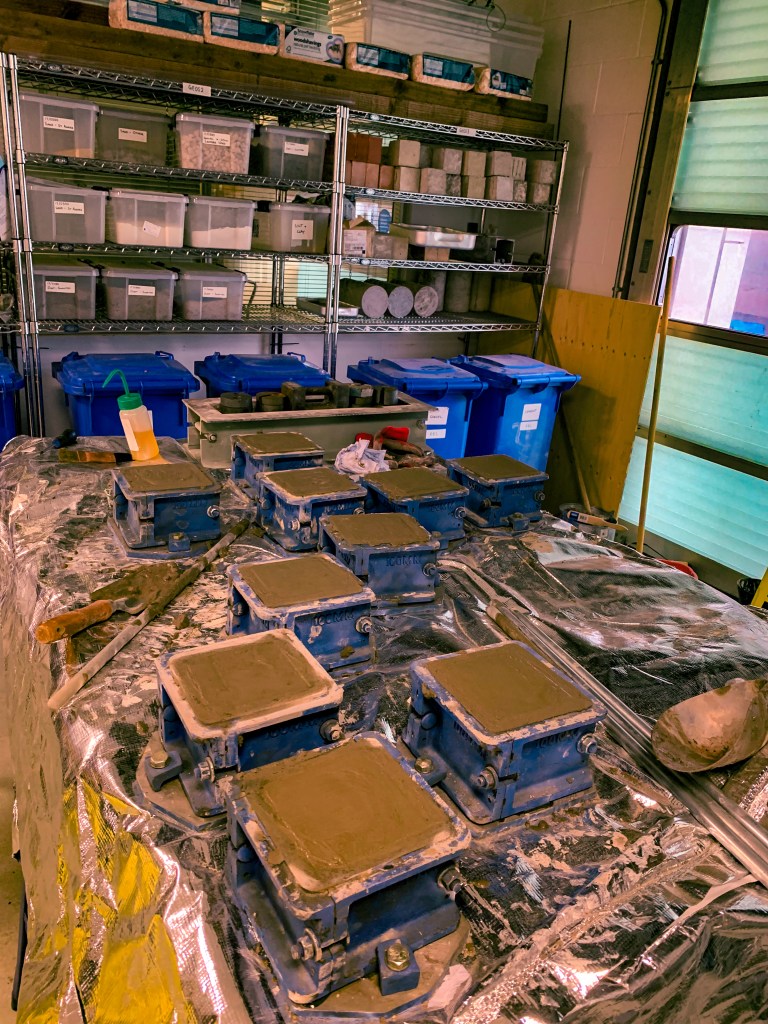
Cube moulds 
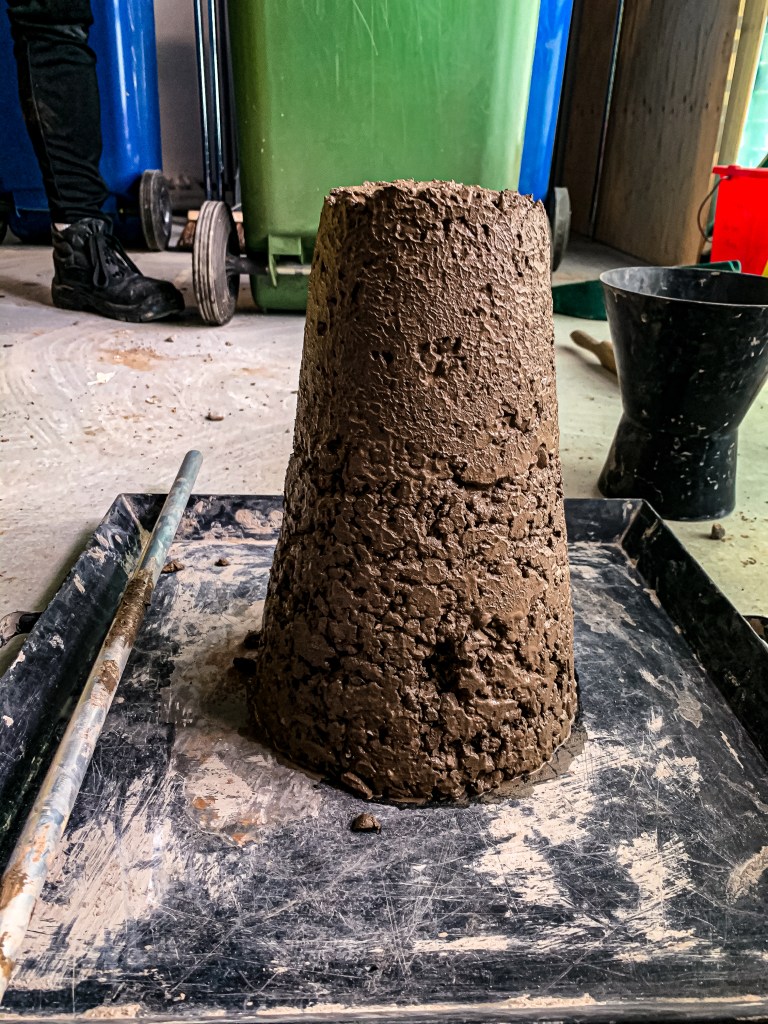
Slump test 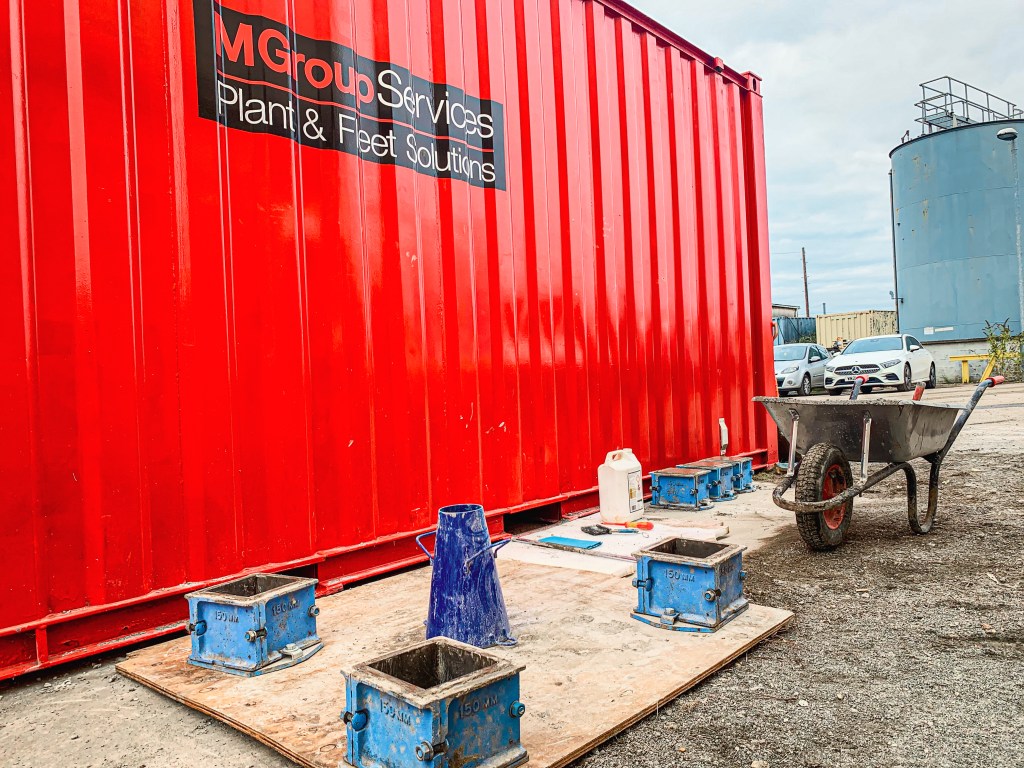
Improvised workstation 
Improvised workstation 
Slump test Imagine your doctor recommends three doses of paracetamols a day for 7days. Then two doses of paracetamols from day 7 to 14. Followed by one dose of paracetamol from day 14 to day 21. Lastly, half a dose of paracetamol from day 21 to day 28. He also recommends during this period, you drink 2 liters of water a day, eat three specific dietary meals a day and abstain from drinking coffee. If you abide by this health guidance, you’d see a significant improvement in your health and be at your strongest on day 28. However, failure to adhere to your doctor’s guidance could lead to a dent in your well-being, health ,and cost implications.
Just like humans, when we were younger, our bones were weaker and became stronger the older we get. Concrete has the same behaviour. Therefore, as Civil Engineers we’ve studied this behaviour and came up with a time vs strength chart/diagram that could be used as the basis on which all projects involving the use of concrete could be derived from to provide Engineering safety assurance for all projects.
The concrete cubes would be at its strongest on day 28. Failure to achieve the required strengths could be due to poor curing methods, insufficient or incorrect materials (sand, cement, stones & water), room temperature etc.
Concrete has a pattern of increasing with strengths over a period of 7, 14, 21, 28 days. Therefore we conduct these concrete cube samples, extract them from the mould, cure them in water, test their strengths in the lab using a compressive testing machine and record the results. Concrete become stronger with water over time hence, we put these cubes in a water-curing tank at room temperature. In addition, during the making of these samples, we also consider what is known as a slump test. An indicator to determine whether the concrete has been mixed properly.
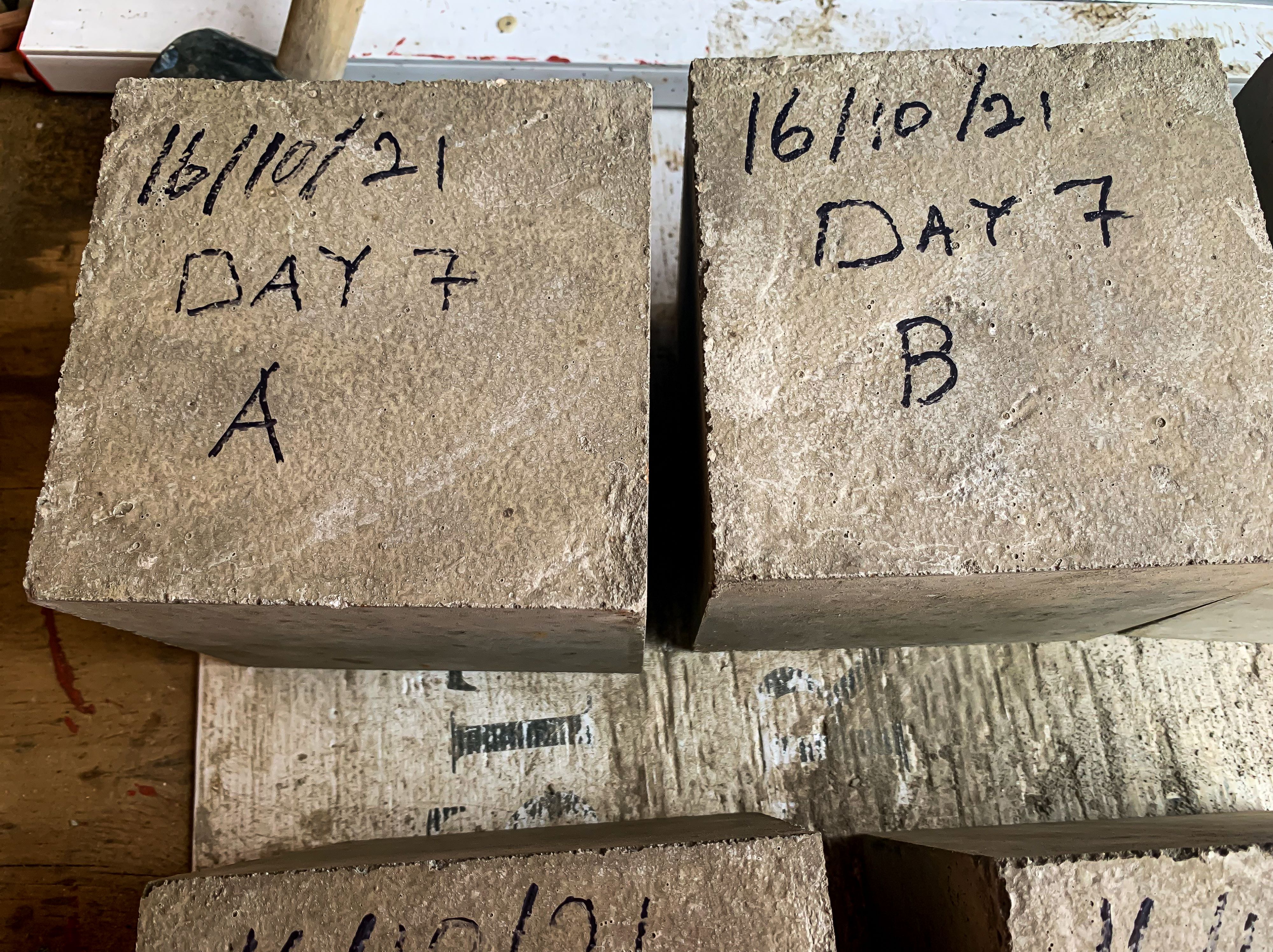

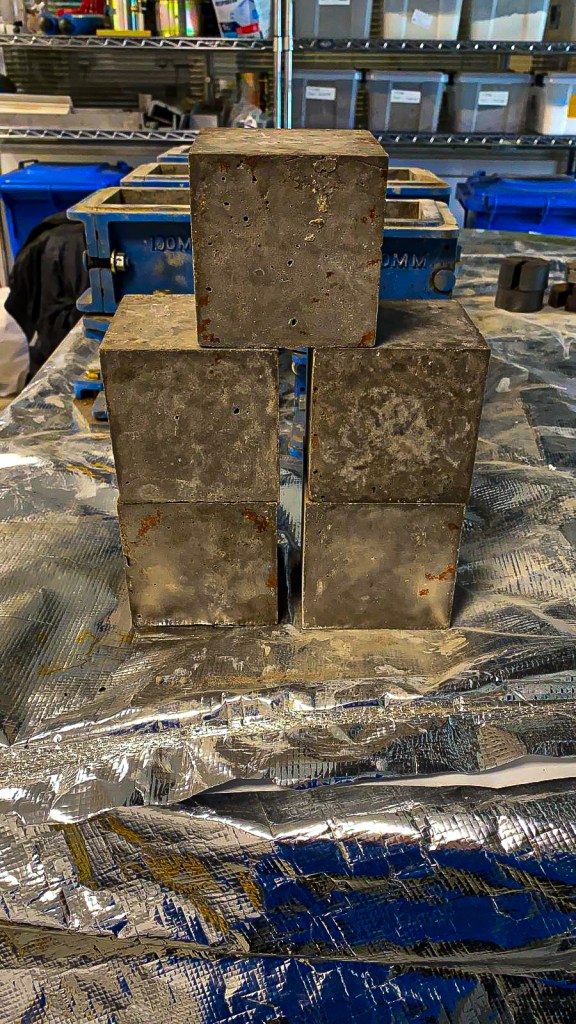
A day later : extracted from moulds, ready to be collected and taken to the lab. One of my roles as a start-up Civil Engineering Graduate is to conduct these samples on site and send them to the lab – subject to the project you are working on. Before the real-world experience, I studied the theory and practical aspects of concrete cubes samples at university – but that’s a story for another day. At university, we had to mix the materials ourselves to produce concrete (See slides below),whereas in the real world the material is already mixed by the concrete supplier. Throughout my Graduate scheme, I have worked on various projects and conducted concrete samples. To ensure we are compliant with the clients and project requirements. Again, I must admit I have made over 50 concrete cubes and a few ended up failing in the lab – so don’t be hard on yourself when this happens.
If they fail, this could lead to cost, time and safety implications. In other words, the entire concrete foundation of your bridge or house needs to be dug out and started from scratch. Therefore, it is important and necessary to conduct and obtain concrete sample the correct way by doing so contributing to the success of projects – It keeps Everyone Happy!!!

What’s work without some fun! NOTE 1 : Safety first. Ensure you have the correct personal protective equipment and supervision (if necessary). Concrete causes skin irritation which could led to Dermatitis – ‘Don’t forget to protect those precious hands with gloves’
NOTE 2: Did you know that Concrete becomes, even more, stronger when combined with steel? i.e reinforced concrete. The two are like best friends.
NOTE 3: In the real world, the concrete cubes are often collected a day later by a sub-contractor (often a company specialising in concrete cube testing) and taken to their lab for curing and testing.They will then send the results, back to us via email.
Tip 1: An enemy of concrete is air voids. So do not forget to whack your concrete cube samples 27 times (before curing) with a tamping rod to get rid of the air in the concrete. Otherwise, your cubes would end up with holes in them.
Tip 2 : Always have spare cube/s, just in case your results from the lab for the other cubes are unsatisfactory. The spare cube/s might prove otherwise.
Tip 3: Always use a marker pen to write the dates on your cubes and distinguish which ones are day 7, 14, 21 or 28. My suggestion is you make 3 cube samples for each day – the more the merrier.
-
Lisbon – part 1
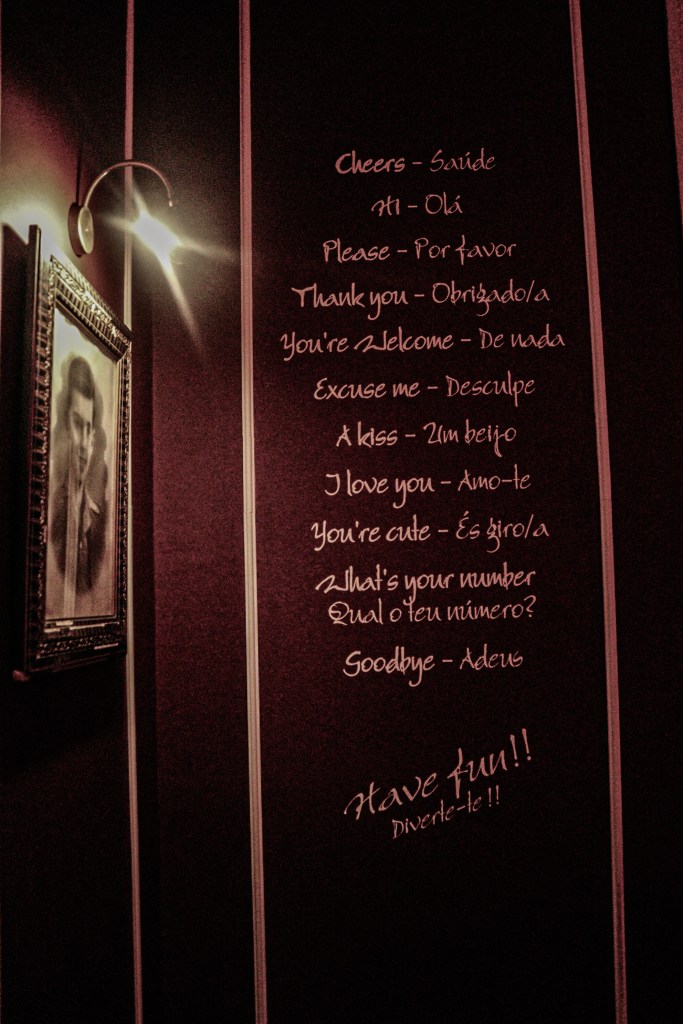
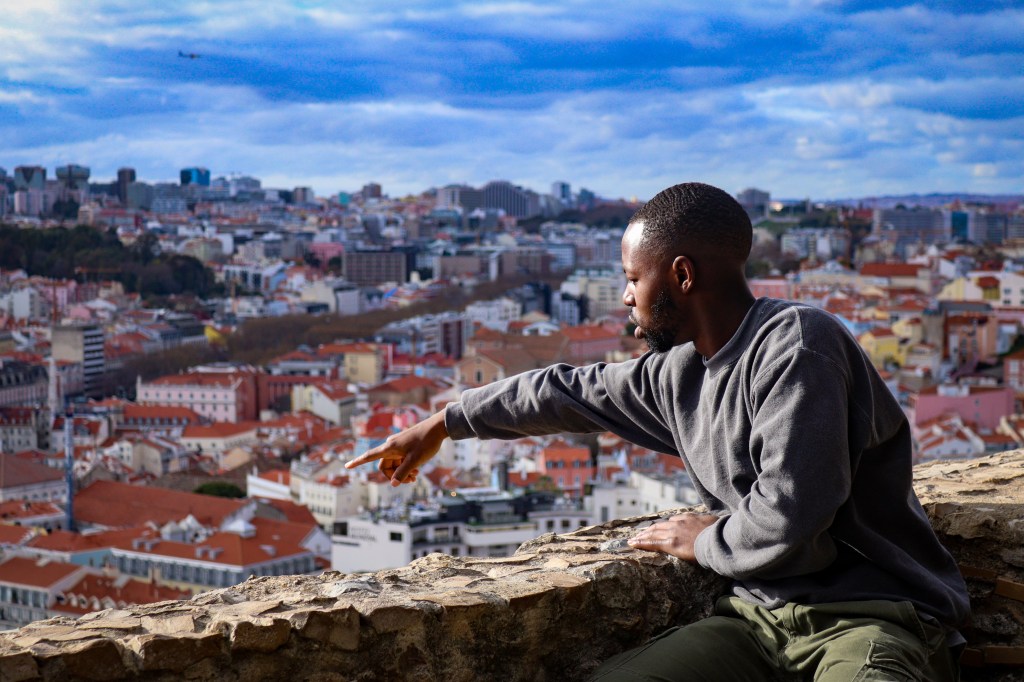
Colourful, Homely, Cheap, History, Art, Hills, Bridge, Friendly, Memorable, Hostel and Fun. A list of adjectives and nouns that comes to mind whenever I think of Lisbon. Fun facts : My home town Sierra Leone was discovered by a Portuguese explorer – Pedro de Sintra in 1462. Hence, one could say it was inevitable to pay a visit to Portugal.

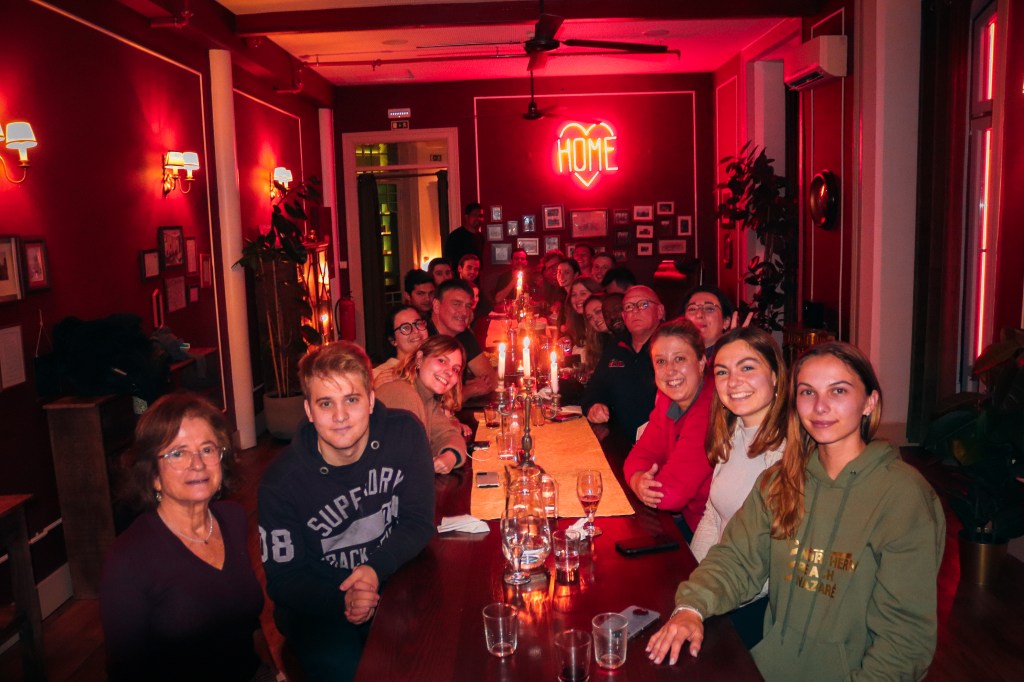
A four days trip where we stayed in a hostel – ‘Home Lisbon Hoste‘. By far the best homely hostel I could think of. Very homely and clean. It comes with a bar, professional working areas for remote workers/travellers, huge living space to Netflix and chill and interact with other travellers and a dinning area that brings together everyone – sharing stories of travels.
My Highlight was walking down the streets of Lisbon, Portugal, I came upon the 25 de Abril Bridge. A suspension bridge that at first glance looked like the Golden Gate Bridge in San Francisco, USA. It was designed by the same team, with a span of over 1000m. It connects the city of Lisbon and Almada. At first, I saw cars driving down it. Then, as I got closer, I saw trains. I was shocked to find out it was a double-decker suspension bridge. Convinced that it must be a tourist attraction, I sought some kind of museum.
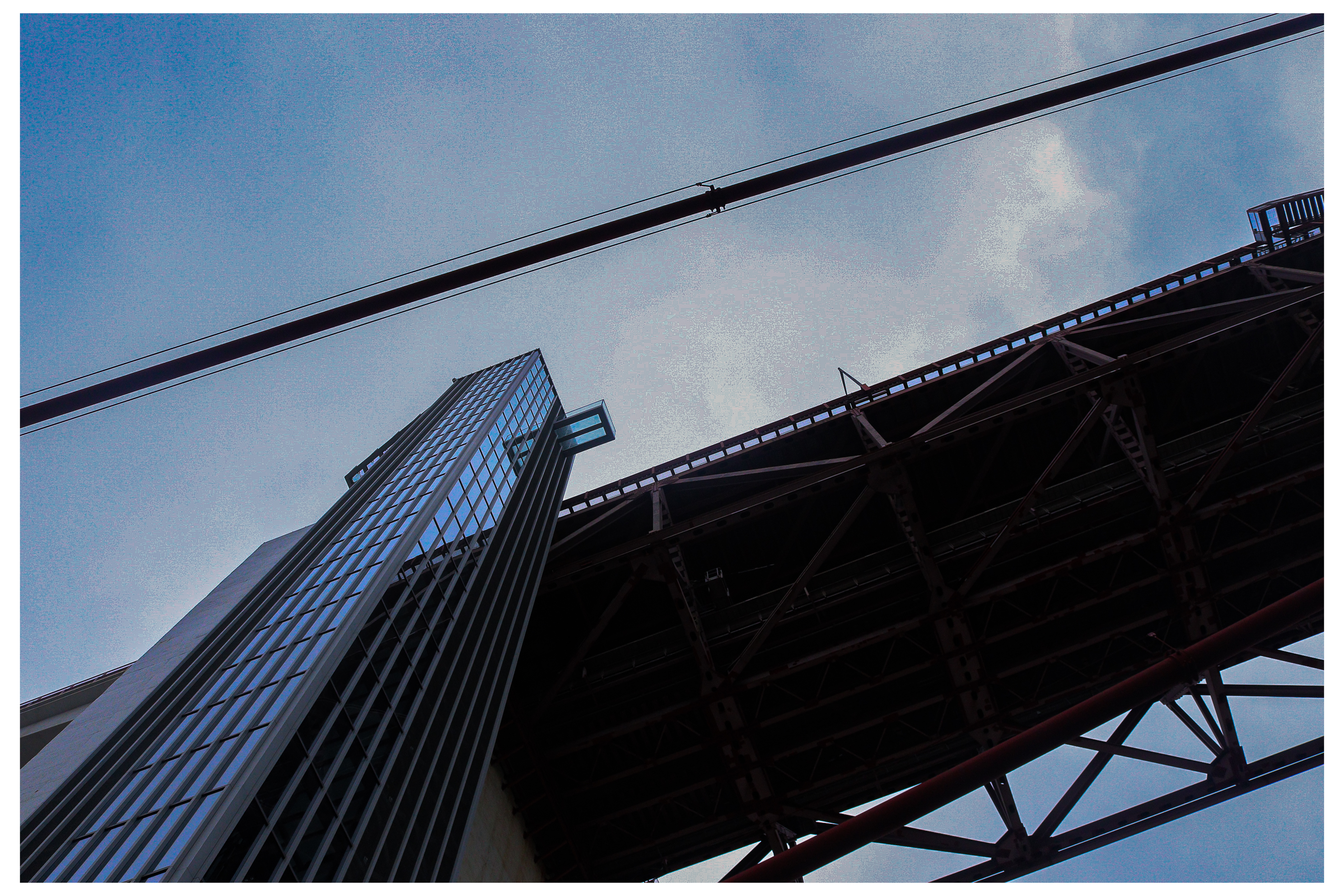
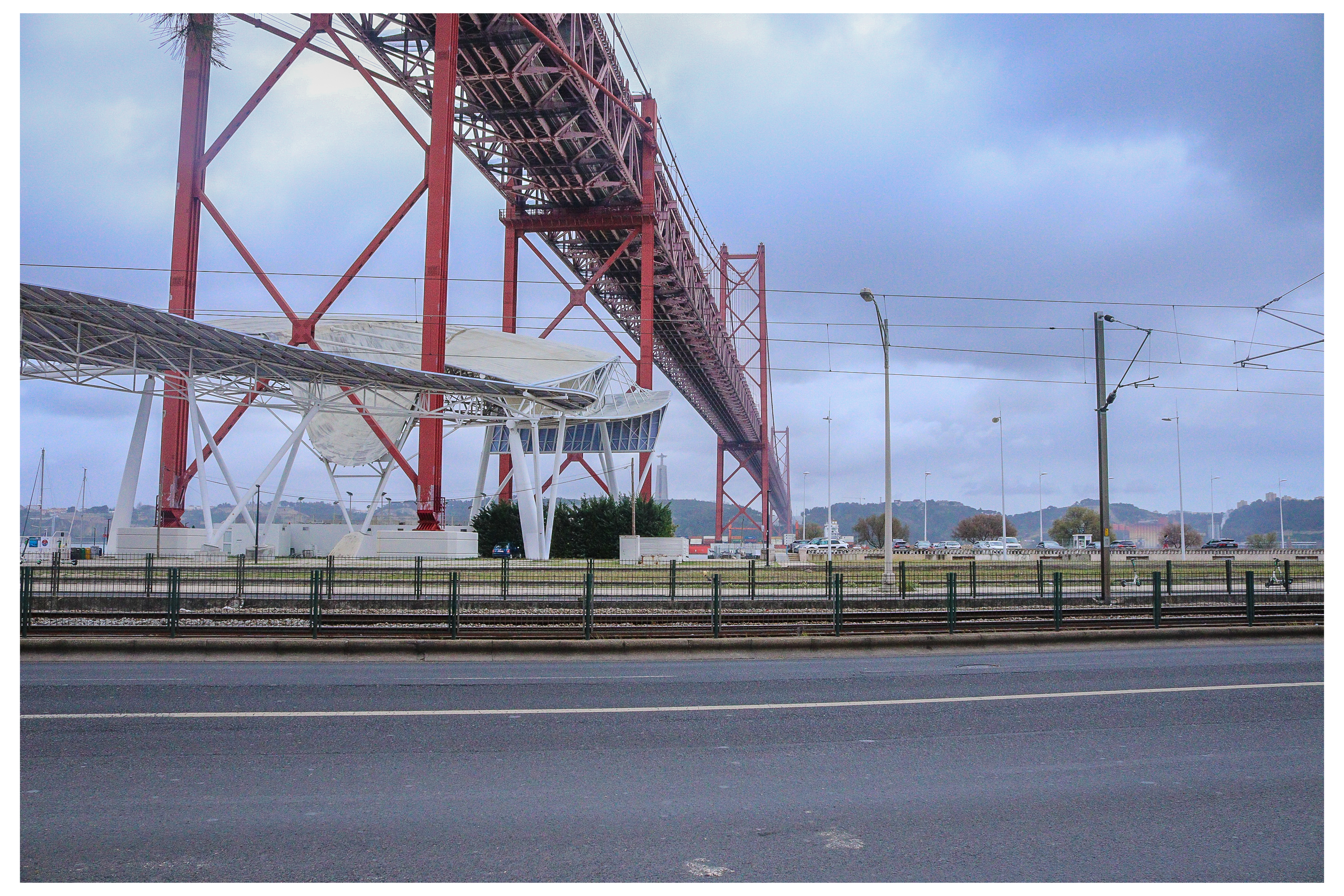
We found it in one of the supporting piers of the bridge. In it, I discovered showrooms detailing the bridges history as well as how it was built. The significant highlight was the lift that takes you all the way up to the same level as the cars on the bridge. Walking out of the lift you would be exposed to a glass floor balcony. Looking down the glass floor is a scary and exciting view of about 50 to 70m below – quite a view to behold.
Places visited : São Jorge Castle, Belém(briefly), 25 de Abril Bridge ALCÂNTARA Lisbon , PRAIA DA CONCEIÇÃO Beach, Cascais, PRAÇA DO COMÉRCIO,
-
The Need For Placement or Gap year.
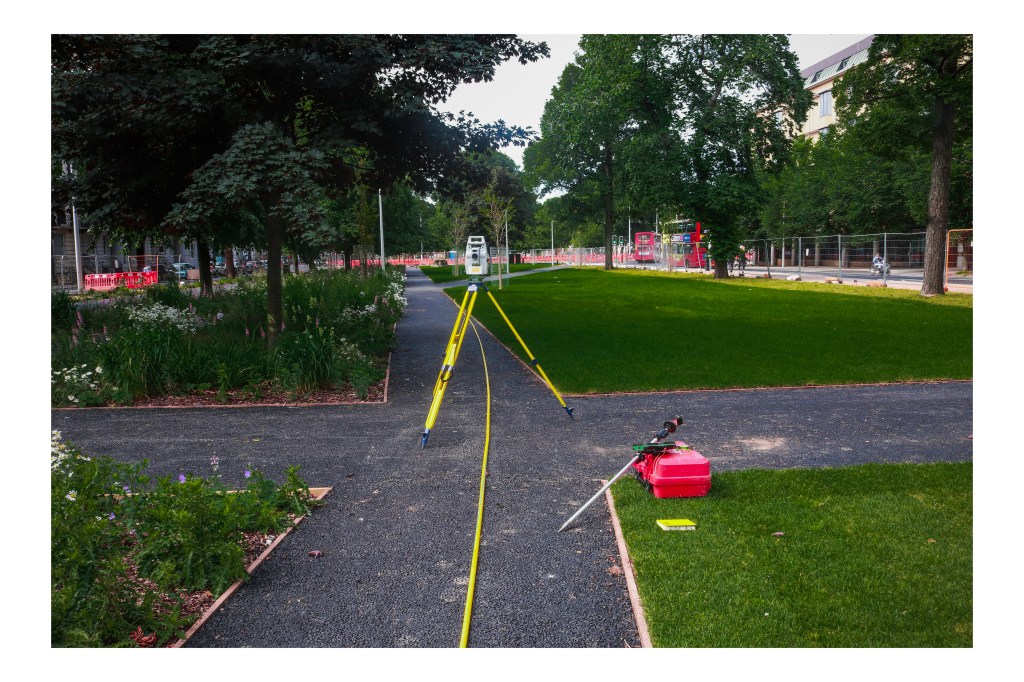
The year 2018-19 saw over 20 applications sent out in order to secure a placement opportunity, within my industry. A few interviews, many Noes and one YES.
The year 2017 was a year of risk. I took the risk to study Civil Engineering at university without a fully comprehensive outlook of the bigger picture. My time at college studying general ‘Engineering’ however, set me up for various specific Engineering sectors if I choose to go down the road of an Engineer. First year at university came and went with ease. The second year kicked off and that’s when I felt the need to reconsider as I was blasted and bombarded with challenging modules to name a few: soil mechanics, structures, BIM, Civil Engineering applications etc.
I sought out the need to polish my CV – with the help of my university careers team and employability advisors. I was coached on how to write covers letters along with recommendations on where to apply for placements – Gradcracker, indeed, Linkedln etc. The need for such urgency was I wanted to know if I’ve made the right industry choice. Securing a placement is a bridge between either a change of course or a passage to the industry.
Being a STEM ambassador and having visited schools and conversed with students has given me a change in perspective. Some students have an idea of their choice of course, some don’t and a few dropouts after their first year. A feeling of Deja Vu surfaced when having these conversations with students.
The solution to such dilemma is the search for placement. By taking such steps it allows you to gain a full understanding of the industry along with networking. I came out of my yearlong placements feeling secured like that of a bolt and nut encompassed with reassurance and purpose.
Returning back to university to complete my final year was the easiest of all my academic phases. Equipped with experience and energy. Sometimes all you need is a break – that could be a placement year or a gap year. Ignore the adrenaline rush of time and age – do it at your own pace.
-
Rome: part 1
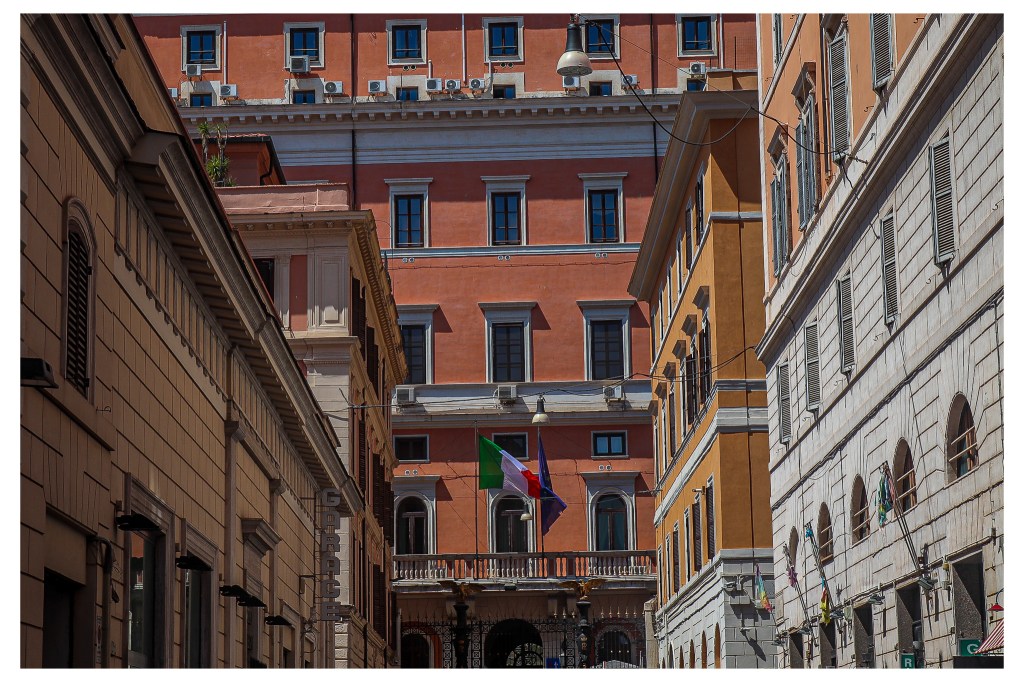
This time last year I sold my car and went on a solo travel in Europe. I had just been offered a job which was to start in September, so I had little time to plan this trip. Three weeks in 3 countries was the plan – including different cities/towns within these countries.
Amongst many other cities/towns I visited, Rome stood out for me. Too bad I was only there for two days before my next stop – Paris. This was a new experience, hence I planned exactly how many days I’d be spending in these cities as my flights were booked ahead thus, it wasn’t wise to miss them.
I stayed in hostels and I was flexible booking them as I go paying £20-25 a night which I thought was a bargain for very decent hostels. Did I mention these hostels also have private rooms not just shared dormitory rooms? female, male, mixed & private.
I hopped on a train from Florence and headed for Rome. Prior to that I met some travellers in Florence (where I also spent 2-3 days). Funny enough they were also heading to Rome the same day as me and staying at the same hostel – ‘YELLOWSAQUARE Rome‘ via booking.com.
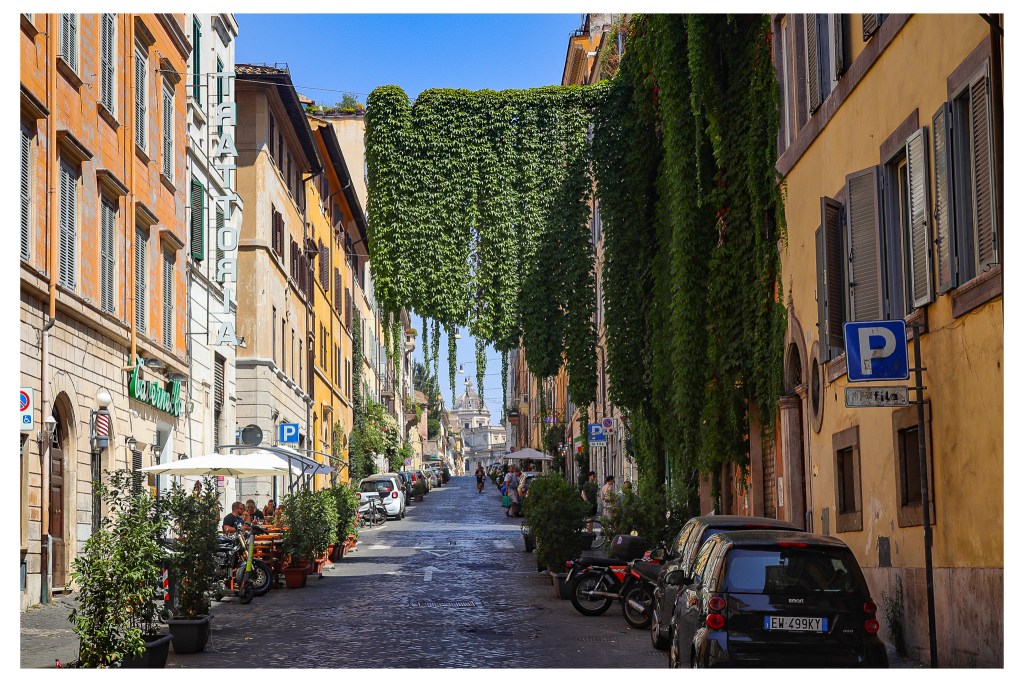
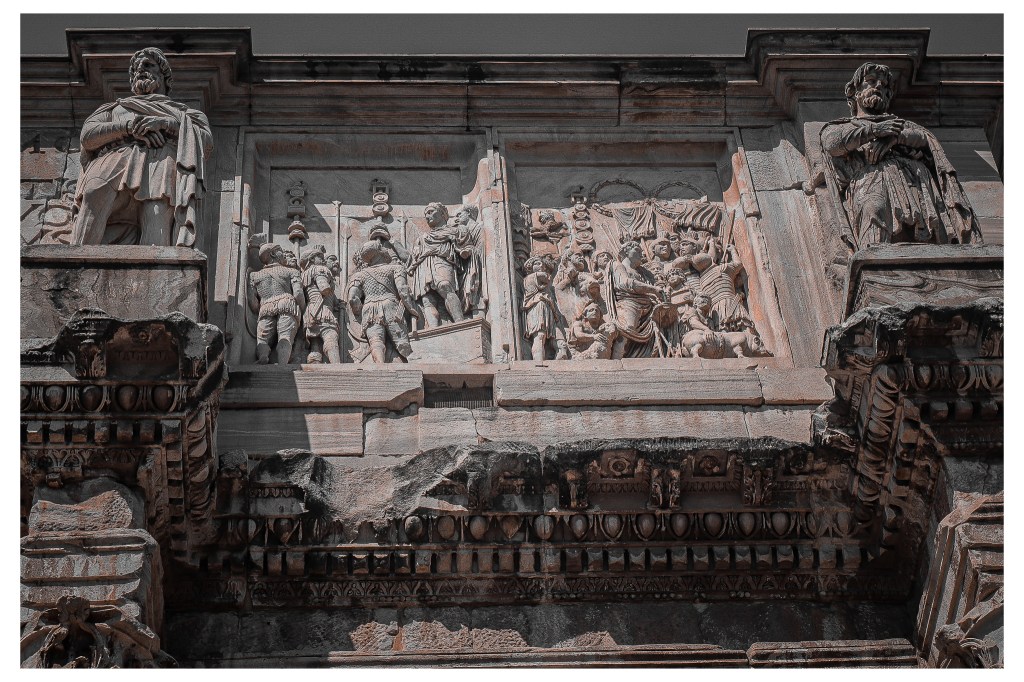
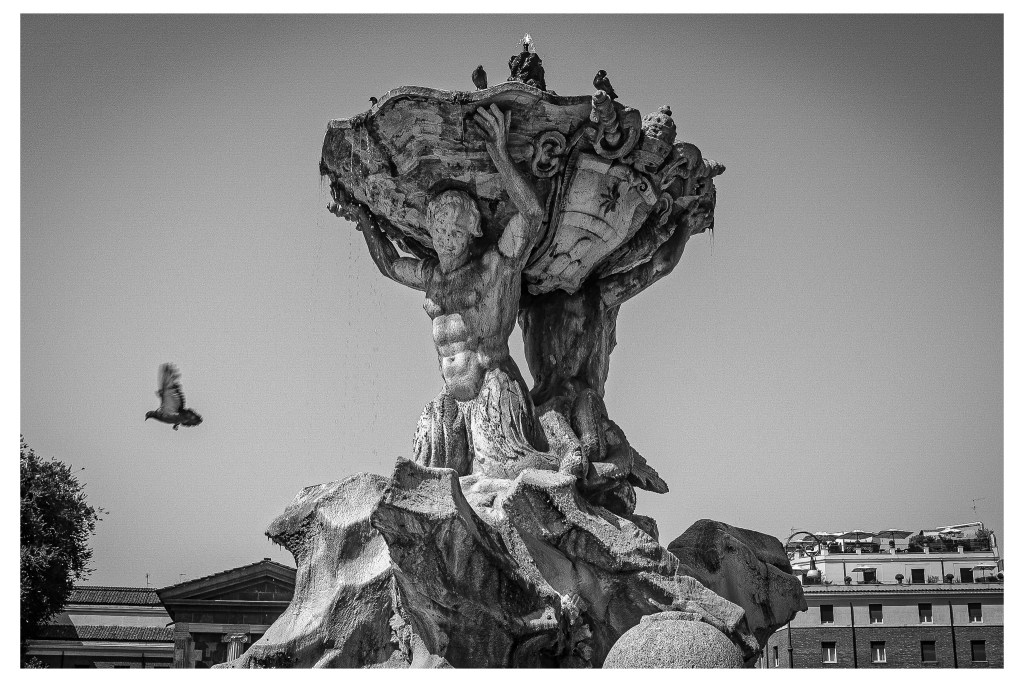
Other than exploring the obvious tourist attractions such as the COLOSSEUM, TREVI FOUNTAIN, ROMAN FORUM etc I explored various cultural settings, randomly. I remember bumping into an American & a French traveller at a bar – Yellow bar just outside my hostel the same day I arrived that afternoon.
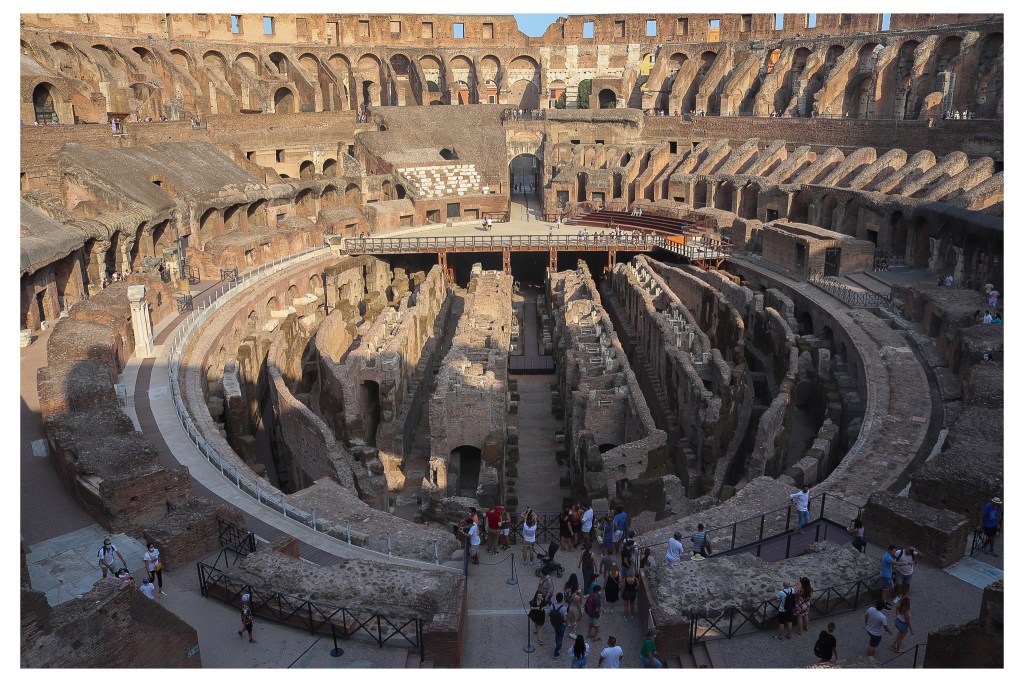
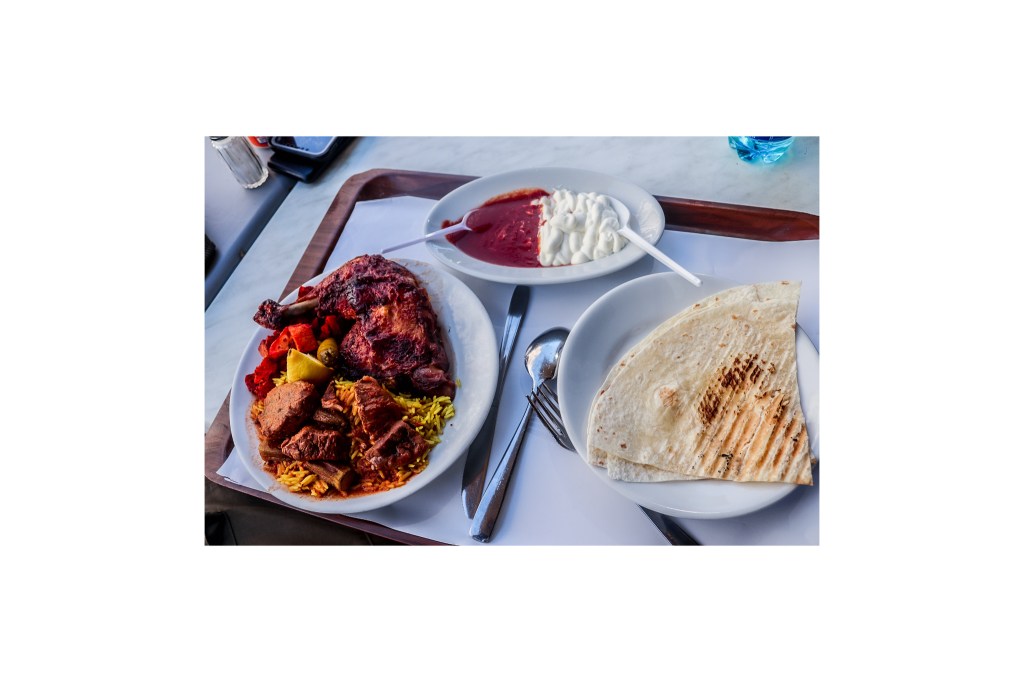
Inside the Colosseum We hit it off straight away and by the time you know we were on a bus to nowhere. That nowhere turned out to be a nice cultural food district destination (I wished I had jotted down the name). We ordered Italian homely food and drinks. Then headed off to TRASTEVERE – another amazing bar district designed like a maze with many bars within its perimeter – Highly recommend.
My main highlight was the YELLOW BAR opposite the hostel on the same street. This bar is famously known by residents and travelers in Rome. You get free discounts on drinks if you stay at the hostel (yellow wrist band) and peak times are between 8pm – 2am.
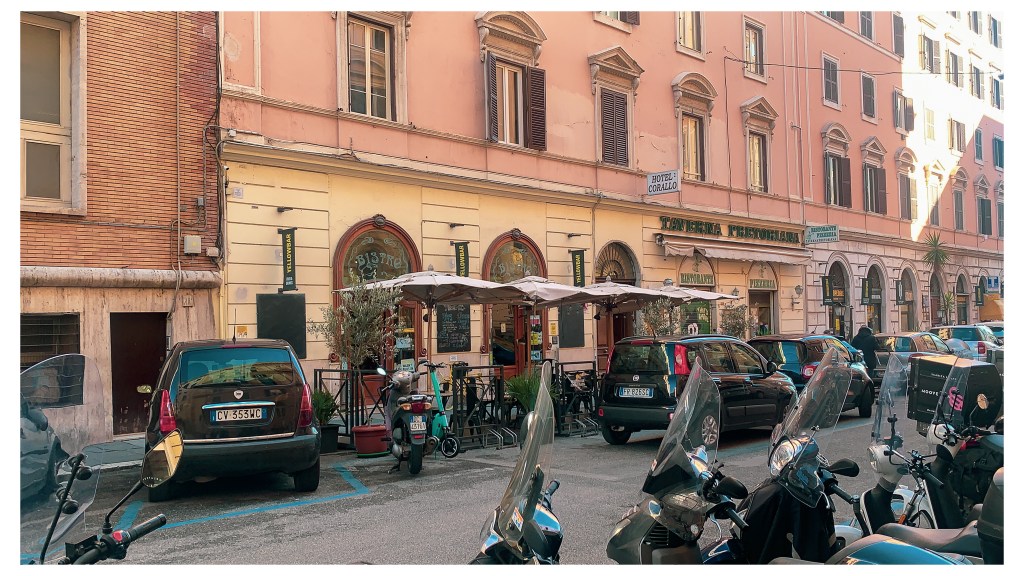
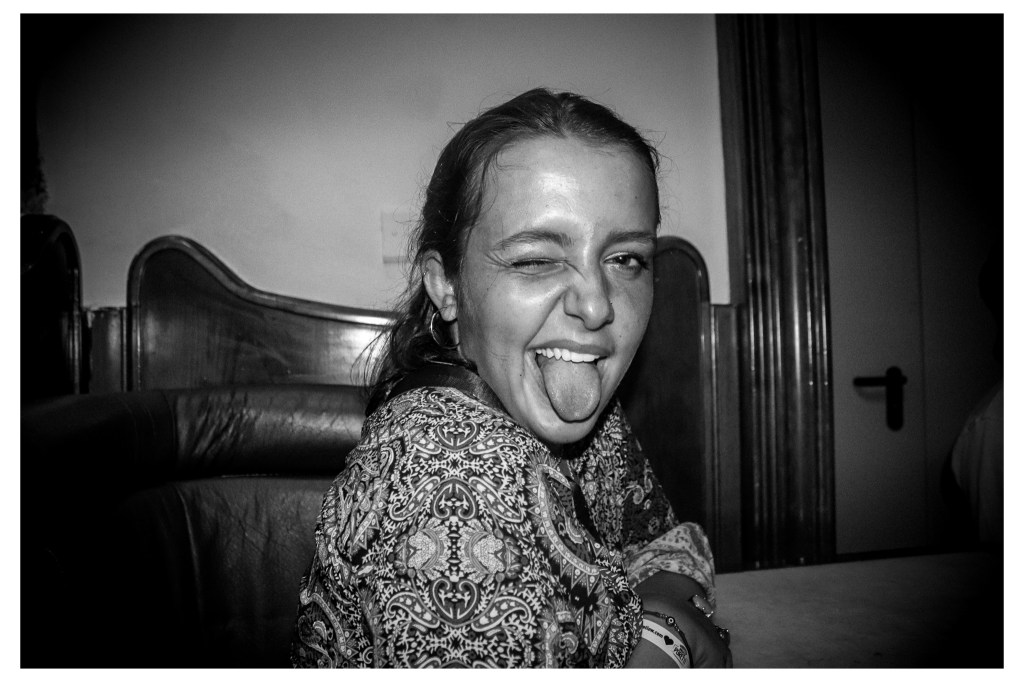
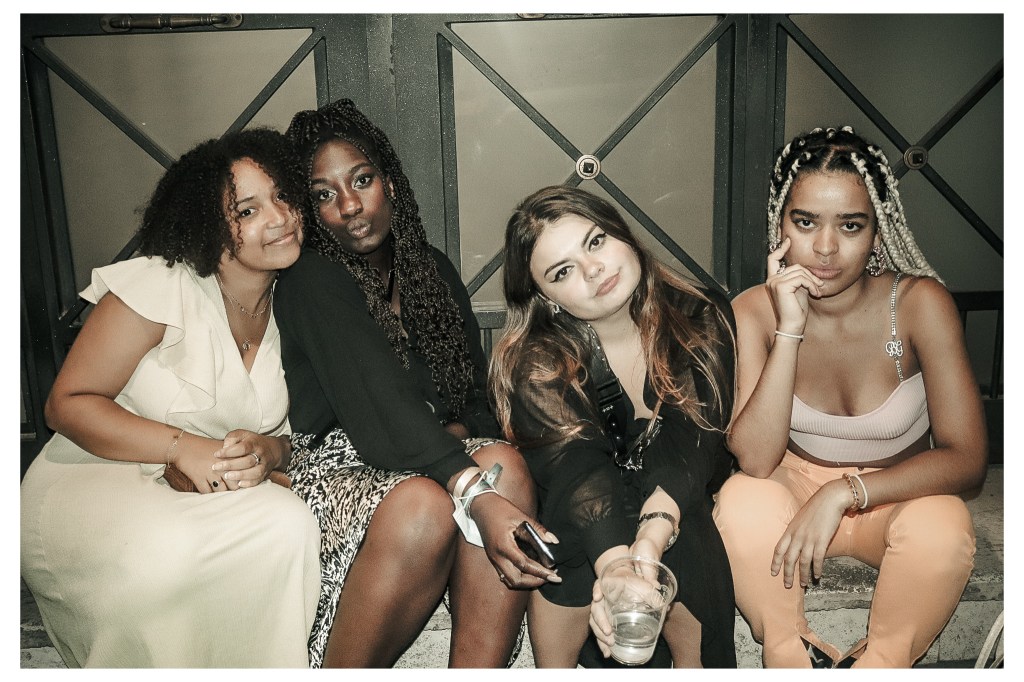
Yellow bar Day 2 – After exploring during the day I chose to end my night at Yellow bar. I met a lot of travellers from all around the world and the frequency of energy and vibe was pure and organic. I must say I was slightly gutted that I was leaving the next morning. I said to myself I’d be re-visiting this place again.
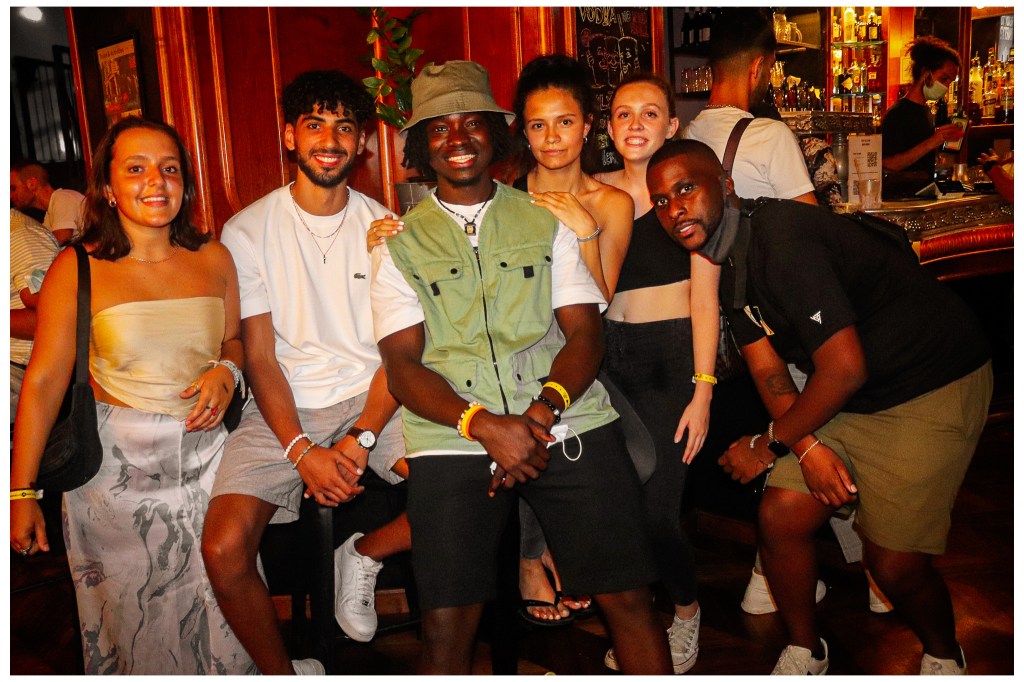
Inside the yellow bar 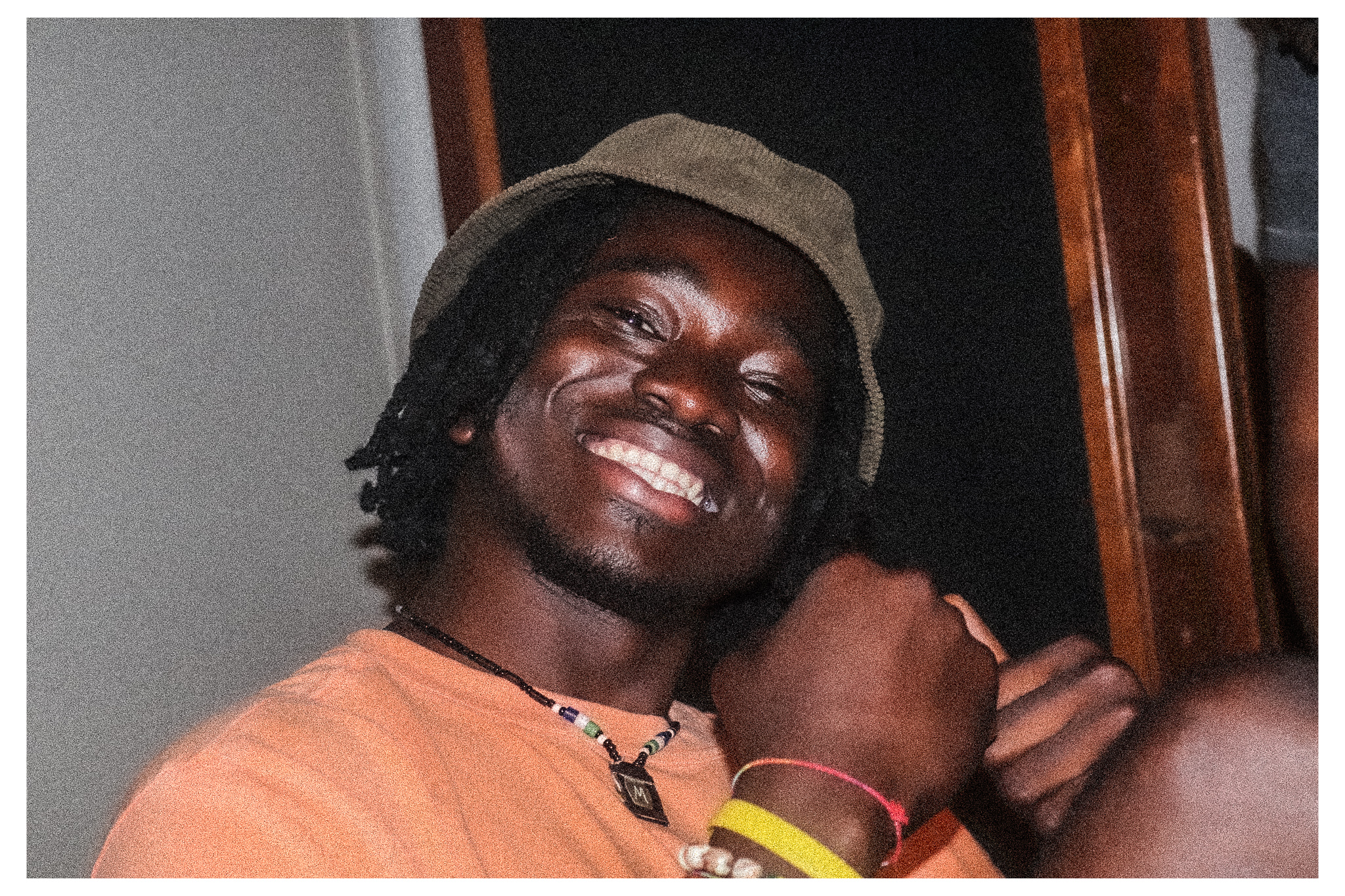
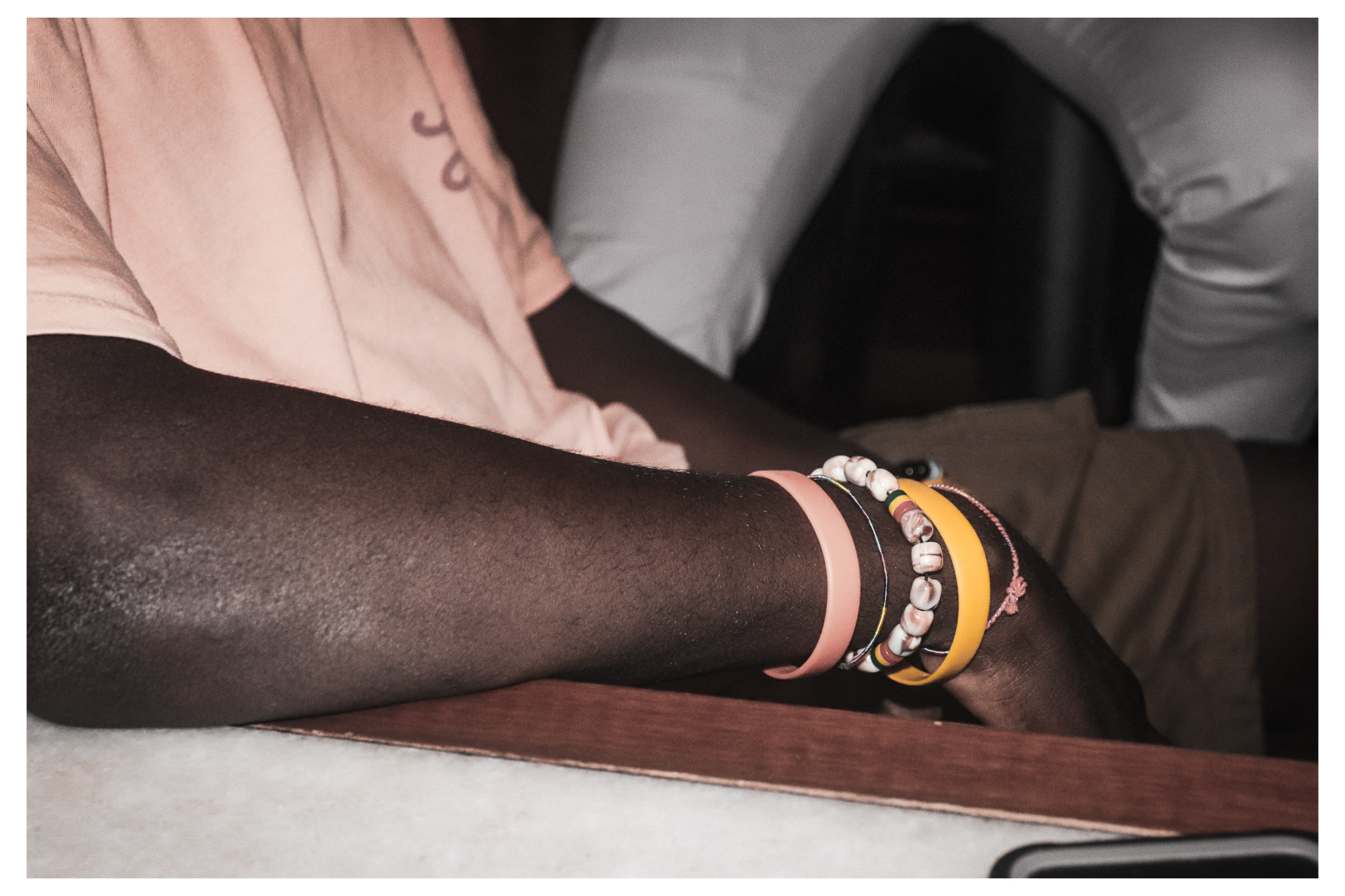
Inside the yellow bar


















 AwalkwithMO